Sunday, May 25, 2008

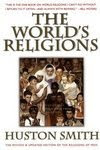
The World's Religions

There might come a time in your life that you yearn to know more about Religion - maybe it is to seek meaning, maybe it is curiosity, maybe you are just down on your luck and need something uplifting. Whatever the reason might be, here you are and trying to figure it all out. But this is no easy endeavor by any means - one only need think of Christendom and its Eastern Orthodox Christians, Quakers, Jehovah's Witnesses, Christian Unitarians to get an idea, or a headache.

So where do you start?

Perhaps a great guidance in a time like this is The World's Religions by Houston Smith, who speaks on the subject authoritatively and eloquently. Smith covers Hinduism, Buddhism, Confucianism, Taoism, Islam, Judaism, and Christianity in less than 400 pages, but none of them is rushed through - each subject is well explained, delved in deep, and thoughtfully laid out for the reader, as if it is the sole concern of the book. Smith convincingly conveys the unique appeal and gifts of each of the traditions and reveals their hold on the human heart and imagination.

This is a book that takes religion seriously; All religions. It does not belittle, mock, or patronize. It is not a tourist guide either - the concepts explained are deep and significant. Religion is a serious matter and the author treats it as such. And I quote:

"Religion alive confronts the individual with the most momentous option life can present. It calls the soul to the highest adventure it can undertake, a proposed journey across the jungles, peaks, and deserts of the human spirit. The call is to confront reality, to master the self..."

This is also a book about values. The author's concern is the world's religions at their best - not much on histories or institutions, but ideas, and wisdom deposits - the empowering essence of religion. The author strives, almost painfully, to give reader the best of the best, and I think he succeeded admirably.

On top of everything, Smith writes well. His writing is clear and beautiful. He can take a complex idea - and believe me, in religion there are plenty of those - and put it in simple terms. He uses fables, stories, and quotes to make his idea even clearer. His prose is free flowing and poetic - a great pleasure to read.

So it would be fitting to end this entry with what the author wrote at the end of the book -

Said Jesus, blessed be his name, "Do unto others as you would they should do unto you." Said Buddha, blessed be his name as well, He who would, may reach the utmost height - but he must be eager to learn." If we do not quote the other religions on these points, it is because their words would be redundant.

Monday, May 19, 2008

The Miracle of Mindfulness

Wisdom is self-evident; perhaps it is analogous to love, you know it when you see it. And that is what I saw the moment I opened this book, and as I read each chapter, each page, until the very last page.

It is an experience to read something like this, not to mention life changing.

Thich Nhat Hanh is a Buddhist monk from Vietnam. His life long dedication to Buddhism and meditation has given him insights into some of the most difficult questions of human life. In this book, he tackles the practice of Mindfulness - how important it is, how it impacts our lives, and some practical advices on how to achieve Mindfulness each and every day.

In short, how to live in the moment.

I know, through my own life experiences, that this is no simple task. It is especially true living in today's ultra-fast culture and lifestyle. Everything is in a hurry; you are always trying to get to that next thing. Your life inevitably becomes a blur right in front of your eyes. Where is the meaning of this kind of living?

To use an example from the book - in order to drink tea you need to wash dishes. If when you wash the dishes all you can think about is preparing the tea and drinking the tea afterwards, then you are really not living in the moment. As a result, you are really not living. That is the unfortunate consequence of not living a mindful life.

And what happens next? When you drink the tea, you inevitably think about something else too - it is a chain reaction, and becomes a habit.

It is very easy to read this book and relate it to your life. The author does not preach, but the wisdom and truthfulness in what he writes come across easily and effortlessly. I suppose truth is self-evident as well. Deep down in the human heart it possesses the incredible ability to recognize it.

"Thich Nhat Hanh speaks with the voice of the Buddha," one critic claims. I suppose there is very little one needs to add to that.

Saturday, April 19, 2008

Launch Fever

Tim Taylor is quite a character - author, entrepreneur, NASA rocket man, family man, venture capitalist, inspirational speaker; you name it. I had the good fortune to listen to him speak one time, and he was just as charismatic in person as in his writing. "Launch Fever" is about Tim's life, the journey he took to become the person he is today, and all the ups and downs life had to offer along the way. He has had an interesting life, to say the least. The book is adventurous, exciting, moving, and very educational. You can learn about a number of things, such as what does a NASA engineer do, and how to become a successful entrepreneur.

But beyond all the specifics, Tim makes a real connection with his readers. He speaks honestly and passionately about his life, and sometimes you can really get a sense of what he went through. I read this book six months ago and even today I can vividly remember many things from the book: the sensation he felt when he first walked on a beach; his relationship with his mentor at NASA; the frustration he felt when he decided to leave NASA; the day when his wife told him they were expecting their first baby. When I read these passages, I could almost feel what he was feeling, and it was powerful.

"Launch Fever" also offers some good insights into life in general. There are not many of them in the book, but every one is good. Tim has a way of making the sophisticated sound simple, and what he says never come across as lecturing, but more as sharing among friends. Tim, despite his success, is a very grounded individual with a set of deep-rooted internal principles. To me, he is a good example of someone who has what Covey calls "Private Victory."

Sunday, April 6, 2008

What Should I Do with My Life?

Who hasn't asked this question in his or her life? I know I have. All the time. The older I get, the more frequently I ask myself that. What should I Do with My Life? Perhaps this is the single most important question for every human being alive. When I first picked up Po Bronson's book I thought this was just another one of those self-help books. You know, the ones with inspirational quotes, catchy phrases, and mind-numbing platitudes, the ones that look just like every other help book you can get. But I was wrong about that.

This book is simply a collection of real life stories about real people - people with imperfections, quirks, flaws, fears. Just like you and me. It is filled with stories about how these ordinary people deal with extraordinary challenges life has to offer. The problems they face are real, the choices they have to make are often tough, and they don't always succeed. There are no easy answers but their struggle is the good stuff, dripping with the honey of life. You feel connected to them, sometimes cheer for them, or sympathize with their pain. By looking at their lives, you reflect on your own. Reading this book reminds me that, well, I am not so alone in my struggle. My path is the same path shared by many other travelers, and they know how I feel. It connects with me on a personal level.

Unlike most of the self-help gurus, coaches you see today, this book is not trying to offer some clear-cut solutions. It is not trying to say "Just do these five things and your life will be better." It does not try to oversimplify the complexities of our life experiences; it simply let each person tell his/her own story, and let life unfold by itself. Instead of trying to be the teacher, it is letting life be the teacher, and it is asking the readers to just sit quietly, and listen, without judgment and prejudice.

Sunday, February 24, 2008

Think On Your Feet

I am a pretty bad speaker; just ask my friends and they will tell you. I get nervous; I blank out; and I lose my focus. And that is why I found Ken Wydro's book so useful; I can only kick myself for not reading it earlier. "Think On Your Feet" shows you, very convincingly, why it is so hard for so many people to be afraid of speaking in public, and think/execute under pressure. Ken does not focus on the superficial elements of the techniques, but digs deep into the inner workings of one's psychology, and shows you the real reason. His theory makes a lot of sense to me.

But Ken doesn't stop there. He also demonstrates how you can change all that with just a handful of techniques. His techniques are simple, easy to practice, and most important, they work! I spend a few minutes everyday working on his techniques, and they are making a big difference. No, this is not some magic potion you can drink to cure all illness, but a set of disciplines and mental conditioning you can integrate into you life that will make a huge difference.

This book is not limited to just public speaking, but really all aspects of life. You can apply his principles to a number of different things - it changes your overall attitude and perspective. This is one of the best self-help books I read in recent years, and deserves to be revisited on a regular basis.

Monday, December 31, 2007